
6 / 6
via merchant
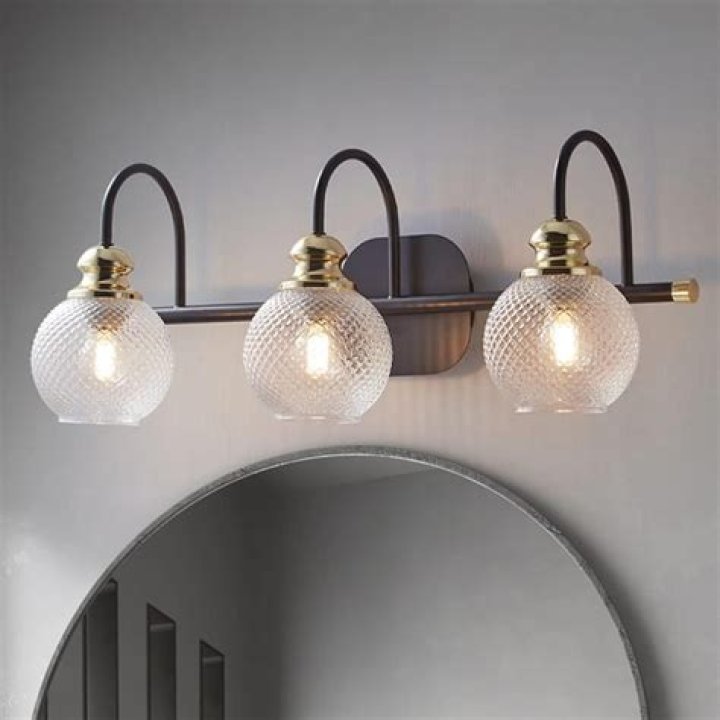
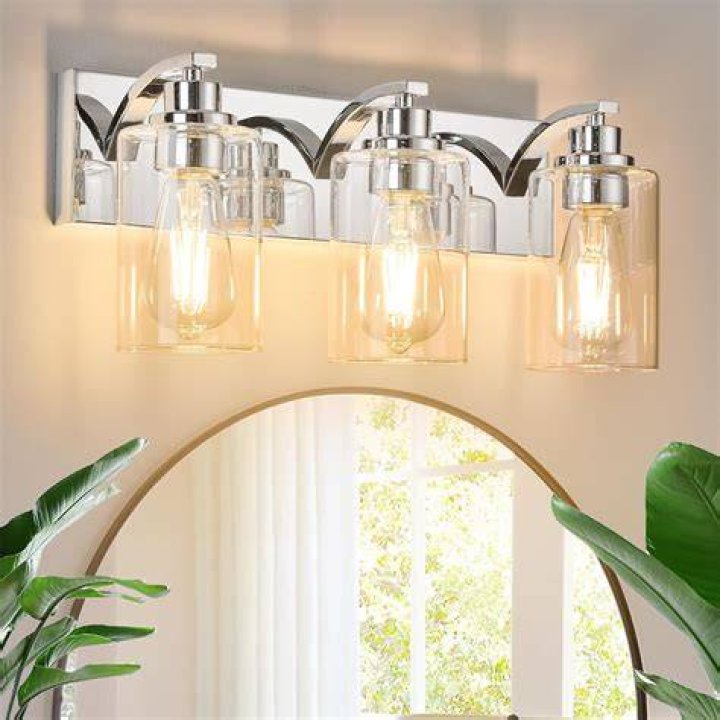
For an updated take on the classic Hollywood globe-bulb mirrors, this vanity bar light nails it. The warm four-bulb light provides the right illumination for applying makeup, and the shape easily takes it into a more stylistically versatile era. The bar fixture has some design, but not enough to overpower a petite room. It could fit in a bathroom or powder room with an art deco, Hollywood Regency or even traditional design.
Pros
- 24-inch compact design
- Won’t break the bank
- Can be mounted vertically or horizontally
Cons
- Only available in black
Types of Bathroom Vanity Lighting
- Wall sconces: These are fixtures mounted on the wall either above or beside the bathroom mirror. Lovato says she always prefers wall-mounted sconces at eye level (as opposed to overhead bathroom vanity lights) because they provide the most functional, flattering lighting.
- Single bar lights: Also known as bath bars or strip lights, these fixtures feature a long, narrow design with multiple bulbs arranged in a single row. They are typically mounted above the mirror and provide even illumination across the vanity area.
- Pendant lights: Pendant lights are suspended from the ceiling allowing for flexibility in height adjustment. They come in a variety of styles and can add a decorative touch to the bathroom. If not properly positioned, they may create a glare and shadows.
- Recessed lighting: Recessed lights, which are installed into the ceiling, provide a clean and minimalist look. Lovato favors them for their ability to offer ample lighting for cleaning tasks. While versatile for different bathroom sizes and providing general ambient lighting, they might not offer sufficient illumination for grooming tasks.
- Mirror lights: Mirror lights are integrated directly into the mirror itself or mounted onto the mirror frame. These lights offer a sleek and modern look and eliminate the need for separate fixtures.
What to Consider When Buying Vanity Lighting
- Size and layout: Consider the size of the vanity area and the layout of the bathroom to ensure adequate illumination. “I find that it’s best to have side sconces on either side of the mirror for ample lighting during the day or night,” says Lovato.
- Style and aesthetics: “The vanity lights should be functional but still decorative,” notes Lovato. Choose lights that complement your bathroom’s style and decor.
- Placement: Lovato suggests buying your mirror first, as this will dictate the best spot for your vanity lights. “Placement really depends on the fixture itself,” she explains. “We always strive to have the light 57 inches above the finished floor or at eye level.”
- Brightness and color temperature: Select lights with the appropriate brightness level and color temperature (warm, neutral or cool) to create the desired ambiance and functionality.
- Energy efficiency: Opt for energy-efficient options such as LED bulbs to reduce energy consumption and lower utility costs.
- Dimming capability: If desired, choose lights that are compatible with dimmer switches to adjust the brightness levels according to preference.
- Damp/wet ratings: Fixtures with damp or wet ratings are safe for humid bathrooms or near water. This is essential for shower or bathtub ceiling fixtures. If water can land on the bulb, opt for a damp or wet rating. Otherwise, it may be less critical for small sink areas away from lights.
- Built-in lights: Watch out for fixtures that have built-in LED lights rather than bulbs. Although they can be long-lasting, you often have to ditch the entire fixture when the light goes out. It doesn’t necessarily make them nonstarters, but you should be aware when purchasing.
How We Found the Best Bathroom Vanity Lighting
As shopping experts, our only job is to help you find a winning product. We start with the research and reporting basics—what products are made of, what they look like and how much they cost—to ensure that we’re only recommending the buys that are worth your time and money. Then, we research the features that speak to the product’s quality, taking advice from industry insiders and subject matter experts on what makes a product a smart value (or worthy of a splurge). Finally, we do the work of combing through user reviews to see how real people interact with the product, and if it stands up to the test.
FAQ
Where should vanity lights be installed?
“Vanity lights are the fixtures installed near a mirror, either above or next to it,” says Andra DelMonico, lead interior designer of Trendey. “If you’re installing your vanity light over a mirror, the light should be about 75% of the width of the mirror. This keeps the mirror and the light looking balanced while ensuring there is enough light created for the vanity.” If you have double sinks, choose two matching lights or separate sconces rather than one long light fixture.
What kind of lighting is best for a bathroom vanity?
Bathrooms are often among the darkest rooms, so lighting temperature matters. Designer Sara Sain of Sain Homes recommends checking the bulb’s Kelvin rating, which categorizes light warmth. “The wrong Kelvin can shift your appearance from drab to fab,” she explains. Opt for around 3,000K, she says. “It’s bright and inviting, without being too gold or clinical.” Also, look for the Color Rendering Index (CRI) rating, aiming for 90 to 100 for accurate color representation akin to natural lighting.