
6 / 6
via merchant
Best Extra-Large Shoe Organizer for Closets
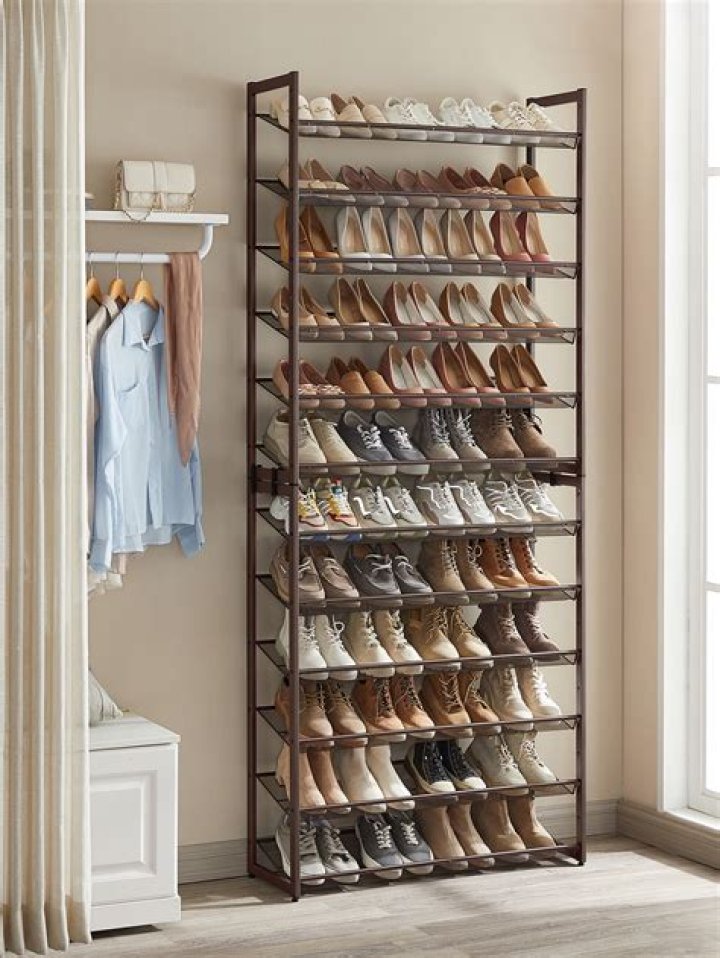
Songmics 12-Tier Shoe Rack
If you have a Carrie Bradshaw-level shoe collection or share a walk-in closet with a partner, you probably need space for a lot of shoes. This extra-large shoe organizer has 12 shelves and holds up to 60 pairs of shoes—or more if you stack flat shoes, like sandals and slippers. It is solidly constructed with metal steel, and can be put together in just 15 minutes. Each shelf holds up to 40 pounds, so your heavy snow boots are no match for this shoe organizer for closets.
Pros
- Holds up to 60 pairs of shoes
- Has adjustable shelves for tall boots
- Shelves can be fixed horizontally or at an angle
- Includes an anti-tipping kit
Cons
- On the pricey side
What to Consider When Buying Shoe Organizers for Closets
Once you’ve done some spring cleaning of your shoe collection, you should have a rough idea of how many shoes you need to accommodate. From there, think about where do you want to put it—or rather, where can you put it? This will help you determine the type of shoe organizer you need. Make sure to measure the space before you buy. If you’re looking at a back-of-the-door organizer or a tall shoe organizer, check the dimensions first and make sure it will fit the closet before you purchase.
Types of Shoe Organizers for Closets
Shoe organizers for closets come in a few different configurations. Here are the most common:
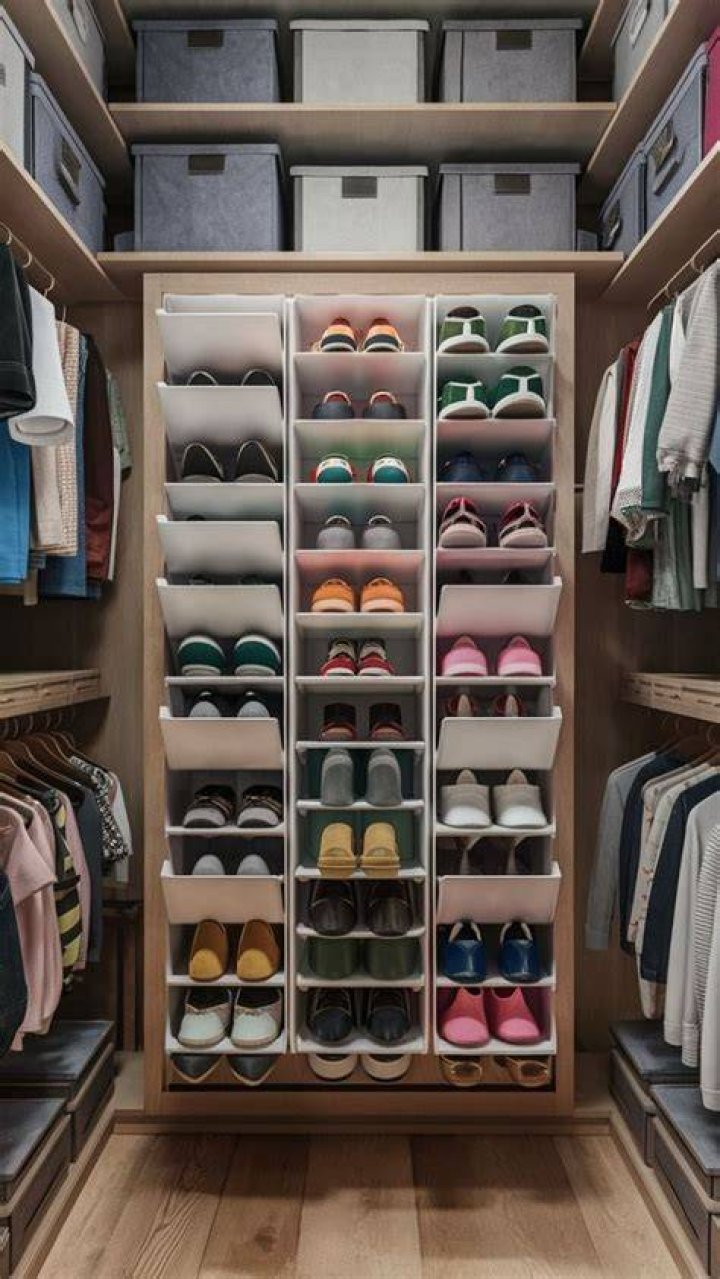
- Shelf-style organizers: Most shelf-style organizers are two- or three-tier shelves that sit on the closet floor, though taller models are available. They are a simple solution and don’t eat up any space that would otherwise be used for clothing. Taller shelving units can hold dozens of pairs of shoes, but they take up a lot of wall space in the closet.
- Hanging organizers: Usually made of canvas-type cloth with a rigid material to add some heft, hanging organizers are suspended from the closet rod. They get shoes off the ground and within easy reach, but they use up clothes-hanging space.
- Over-the-door organizers: Made to hang on the back of a door, over-the-door organizers are appealing in that they get shoes off the ground without taking up space in the closet. However, they can be kind of clumsy on a door, and may interfere with closure on doors that open outwards.
- Box-style organizers: These are typically plastic boxes that can be stacked. Each box holds a single pair of shoes. They’re a neat way to keep shoes in sight, but they can be flimsy, especially if stacked too high.
How We Found the Best Shoe Organizers for Closets
As shopping experts, our only job is to help you find a winning product. We start with the research and reporting basics—what products are made of, what they look like and how much they cost—to ensure that we’re only recommending the buys that are worth your time and money. Then, we research the features that speak to the product’s quality, taking advice from industry insiders and subject matter experts on what makes a product a smart value (or worthy of a splurge). Finally, we do the work of combing through user reviews to see how real people interact with the product, and if it stands up to the test.
FAQ
What is the best way to store shoes in a closet?
The “best” way to store shoes in a closet depends on your particular closet configuration and how much space you have to work with. A storage system that keeps shoes separate, orderly and within easy reach is a winning solution. When possible, keeping shoes off the floor makes it easier to clean the floor.
Is it better to keep shoes in boxes or out?
Shoes that are infrequently worn, like a special pair of fancy high heels, for example, can be stored in their original box. But once you start wearing a pair of shoes regularly, a cardboard box isn’t the best storage solution, as it prevents the shoes from airing out.
Can mold grow on shoes in the closet?
Shoes that get wet and aren’t dried properly before being tucked into the closet can form mold, especially if they’re put in a closed box. But generally speaking, mold won’t grow on shoes in a closet unless there’s a moisture problem in that area—and that’s a sign of a bigger issue that requires mold remediation.