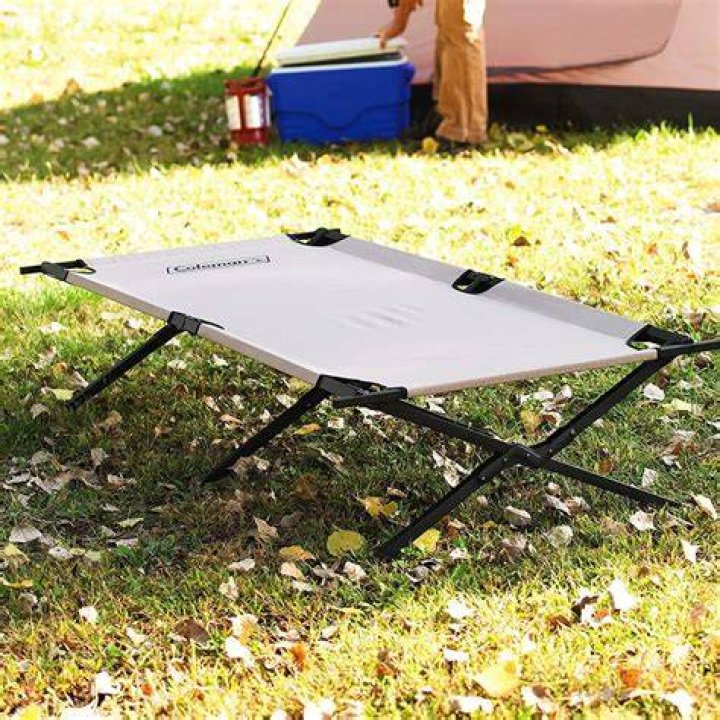

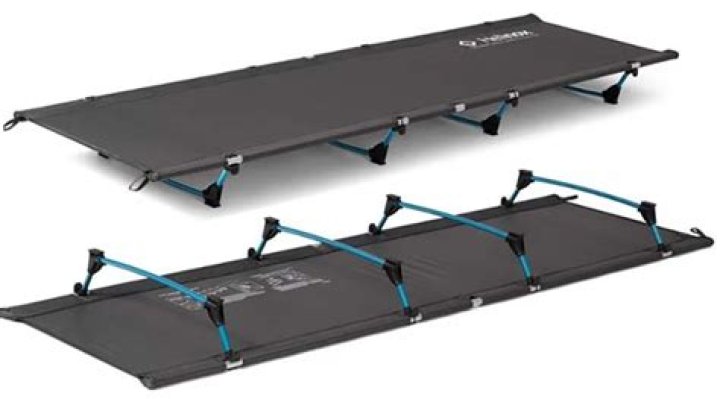
via merchant
Some backpackers are all about forgoing comfort and making their base weight as light as possible. Others refuse to give up some creature comforts. I fall into the latter camp and would be more than willing to carry an extra 2 pounds, 13 ounces if it meant better, deeper sleep. And that’s just what the Helinox Lite Cot promises.
Packing down to just 5 inches wide by 21 inches long, this cot can strap to the side or bottom of a pack or even slip inside a larger pack. It’s not a true ultralight solution by backpacking standards, but more than doable for a moderate or occasional trip. Even if you’re not going backpacking, the lighter weight is welcome when your vehicle is loaded with other gear.
The platform is made of durable ripstop nylon that resists tears and fraying. You’ll need a sleeping bag or pad on top for warmth, but otherwise, this cot is ready for all your upcoming adventures. Oh, and don’t forget to check out this Helinox chair for another excellent camping essential.
Pros
- Weighs under 3 pounds and packs down to a compact size
- Durable construction
- Aluminum frame
- Internal bungee self-assembles the poles
Cons
- Sits really low to the ground
- Weight capacity is only 265 pounds
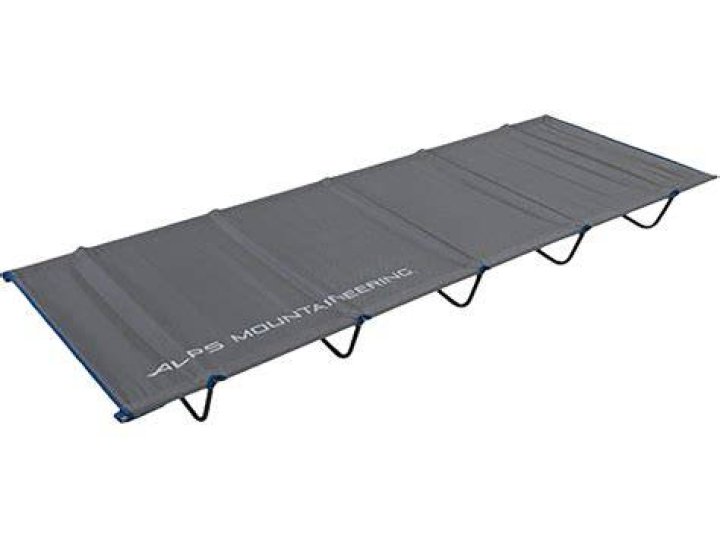
via merchant
The ALPS Mountaineering Ready Lite Cot packs smaller than the above Helinox Lite Cot, but it weighs about 2 pounds more. It folds down to a nice, neat, 18-inch by 8-inch by 3-inch rectangle and fits in an included carrying bag. There are lighter and smaller cots out there, but we like this one because of its full steel frame, whereas other backpacking cots have plastic parts that won’t last as long. This cot also features a sleeve platform to insert a sleeping pad in between the two honeycomb ripstop layers.
Pros
- Packs down to 18-inch by 8-inch by 3-inch
- Weighs just 5 pounds
- Durable ripstop fabric
- Platform doubles as a sleeve for a sleeping pad
Cons
- Expensive
- Low to the ground
What to Consider When Buying a Camping Cot
Here are several factors to work into your search for the best camping cot.
- Body weight and size: Make sure to check the weight and height capacity in the product description to ensure the cot can fully support you comfortably.
- Number of campers and/or pets: If you plan to sleep on the same cot as your partner, friend or pet(s), you’ll probably need an XL or XXL cot.
- Type of camping: If you are backyard camping, car camping or backpacking, you’ll need a cot with specifications that make it more suitable for that purpose, such as adjustable legs or a smaller size, respectively.
- Weather conditions: Look for a cold-weather cot if you plan to camp during winter months or at high elevations, and a water-resistant cot if you camp in humid, damp or rainy areas.
- Assembly: Read customer reviews to get an idea of how easy it is to assemble the cot and if there are any safety hazards.
- Product size and weight: Make sure the cot fits in your vehicle and/or pack and isn’t too heavy to carry around, whether you’re only moving it from your car to your tent or you’re hiking to your site.
Types of Camping Cots
Here’s a brief on different types of camping cots to keep in mind as you continue your search:
- Military cots: This is your basic, run-of-the-mill cot with a steel or aluminum frame and a nylon or polyester platform. They may or may not come with a sleeping pad.
- Car camping cots: These are specifically designed for vehicles and have adjustable legs to account for the design of most SUVs and station wagons.
- Lightweight cots: This type of cot may mean you sacrifice some comfort to keep your pack weight down.
- Backpacking cots: Even lighter than lightweight cots, backpacking cots also pack down to a small size suitable for long hikes.
- Cold-weather cots: A cold-weather cot comes with a cot warmer or a specific layer to help trap body heat when camping during cold weather.
Why You Should Trust Us
I’m an avid outdoor enthusiast with a passion for writing about all things adventure, travel and fitness-related. As a triathlete, hiker, and CrossFit athlete, I live for exploring the great outdoors. As a writer who specializes in health and the great outdoors, I’ve gained extensive knowledge in finding the best camping gear to suit any adventure. Whether you’re gearing up for a multi-day backpacking trip or hitting the trails for a trail run, you can trust me to help you find the perfect gear.
How We Found the Best Camping Cots
Our search for the best camping cots began with researching the various types and styles on the market, keeping the needs of various campers in mind. We looked for cots that were lightweight enough for backpackers, budget models for those just dipping their toes into the great outdoors and sturdy models that frequent campers will get plenty of use out of. We then researched the quality, material, functions and features of the top models from the most trusted retailers in camping gear.
FAQ
What is the difference between cot and camp cot?
In reality, any cot can be a camp cot if you take it camping. The cot that goes camping is a camp cot. But to be more specific, a camp cot is designed to withstand the typical wear and tear that comes with facing the elements. They feature aluminum or powder-coated steel frames to protect from oxidation as well as easy-to-clean rip- and water-resistant fabrics. Camp cots tend to be smaller than regular cots since they are designed to fold up for easy transport.
Are cots warmer than pads?
Cots actually tend to be colder than sleeping pads because they are raised from the ground, so there is nothing to trap warm air beneath your body. However, coldness can be mitigated by investing in a good sleeping bag to use on your cot.