
Zero Dark Thirty is a thrilling account of the search for Osama bin Laden, but it changes aspects of the true story for the sake of entertainment.
Zero Dark Thirty is well-known for its thrilling depiction of the American government's search for notorious terrorist Osama bin Laden, but there are several details in the movie that were actually changed or altered from the true story. Also, since its release, a lot of new information regarding America's behavior in the pursuit and bin Laden's exact actions has come to light, which wasn't previously available. Zero Dark Thirty was widely praised at the time for its unwavering adherence to the truth, though this never prevented writer Mark Boal and director Kathryn Bigelow from sensationalizing certain aspects and making slight adjustments for the sake of entertainment value.
Zero Dark Thirty's title refers to the time at which America's raid on bin Laden's compound took place, and this moment is one of the movie's most central events — yet several important details about the raid that are now known bring the veracity of Boal and Bigelow's telling into question. At the time of its making, the events depicted in the movie were still shrouded in mystery and secrecy, which meant that certain information was withheld from the public. Zero Dark Thirty is much more accurate than most historical dramas have managed, but that doesn't mean every single detail plays out on-screen exactly as it did in reality.
The Film Exaggerates The Government's Use Of Torture
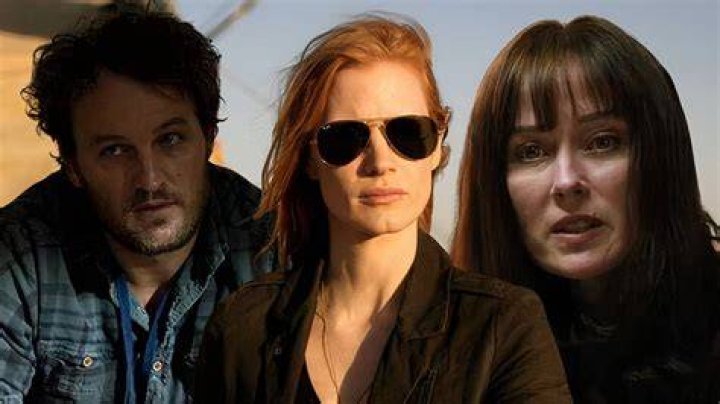
From the beginning of Zero Dark Thirty, which is included among the most brutal torture scenes in movies, the American government is shown to have no issue with using extreme interrogation methods on its prisoners. Audiences are immediately introduced to Jason Clarke's character, Dan, through a brutal torture sequence, in which he attempts to extract important information from a potential terrorist associate by waterboarding him. But this isn't exactly how the military operated.
Several high-ranking government officials have taken issue with the movie's exaggerated approach, claiming that while certain torture methods may have been used in some cases, they were rarely effective and shouldn't have been portrayed as common or successful. Although both Zero Dark Thirty and Bigelow's prior movie, The Hurt Locker, are partially based on reality, the director has a habit of exaggerating certain aspects. Former Assistant Secretary of Defense Graham Allison wrote in The Christian Science Monitor, "[Zero Dark Thirty] exaggerates the pervasiveness and effectiveness of torture." The extent of America's use of torture is still being debated today, but it's agreed it wasn't as extensive as Bigelow suggests.
The Film's Depiction Of Jennifer Matthews Was Not Accurate

Although her name wasn't used in Zero Dark Thirty, Jennifer Ehle's character, Jessica, was based on a real-life CIA Agent named Jennifer Matthews, whose work in the Osama bin Laden investigation eventually led to her own death in a suicide bombing. In the movie, she only appears briefly to work with Jessica Chastain's character, Maya, when setting up a meeting in the camp. It's a small role, and it serves mostly to prove just how dangerous the terrorists really are. However, many people who actually knew Jennifer Matthews have taken issue with the simplified and potentially condescending interpretation of her.
The problem of Jennifer Matthews seems to have been Zero Dark Thirty's most contentious error, helping to make it one of the most controversial movies of the 2010s. Certain colleagues that worked with her have said that the character in the movie "was not representative of who [Matthews] was as a person." Another claimed that they were "so angry at this heated depiction of Jennifer as some fluffy-headed schoolgirl" (via Reuters). If the filmmakers wanted Zero Dark Thirty to be accepted as a true story, they should have been more careful with its inclusion of real-life figures.
The Detainees Did Not Reveal Any Useful Information In The Capture Of Bin Laden

It's immediately clear in Zero Dark Thirty that the American military intends to extract information from terrorist detainees, and in the end, that's exactly how they track down Osama bin Laden, through his associates. However, this is not actually how the capture went down in reality. The detainees weren't that useful to the CIA — most of them refused to say anything at all, but for the very few who did speak, their information turned out to be useless and unnecessary. It was the investigative work of the CIA that allowed them to find bin Laden, not their acquired intelligence.
After watching Zero Dark Thirty, the former Director of the CIA wrote that “in the end, no detainee in CIA custody revealed the facilitator/courier’s full true name or specific whereabouts. This information was discovered through other intelligence means" (via NRCAT). This brings much of the movie's narrative into question, as Zero Dark Thirty seems to suggest that Jessica Chastain's character is successful in her pursuit thanks to several detainees' corroborating information about bin Laden's mysterious courier.
The Film Gives Too Much Credit To One Individual
Although Zero Dark Thirty is considered one of Jessica Chastain's best movies to date, her character is given way too much credit for what occurs. The search for Osama bin Laden and his associates was one of the largest and highest-effort pursuits ever practiced by American forces. There were thousands of CIA operatives who dedicated several years of their lives to this cause, and yet Zero Dark Thirty seems to suggest that Chastain's character, Maya, was solely responsible for tracking down the terrorist. Naturally, there were several government officials who felt insulted and forgotten by this simplistic narrative that the movie presents.
Former Assistant Secretary of Defense Graham Allison sheds light on this controversy in his Christian Science Monitor op-ed, claiming "the film’s hype of a fictional heroine who succeeded by defying 'the system' is fundamentally misleading." There's a certain responsibility that movies based on true stories must hold, and this one seems to have let that slip. It's this backlash and controversy that has prevented Zero Dark Thirty from reaching the same levels of success as Kathryn Bigelow's prior movie, The Hurt Locker, despite its technical and narrative prowess. If the filmmakers truly wanted Zero Dark Thirty to be an accurate story, they should have recognized the entire organization that helped.
MORE: What Is The True Story Behind Thirteen Lives & How Accurate Is It?